Kitchen Management · 23 October 2026
The pre-shift briefing: how a kitchen sets up its day
A service is rarely lost at the peak. It is lost earlier, when the team starts work without knowing what is coming. A short briefing before prep begins changes that.
By Stefanos Kokkalis
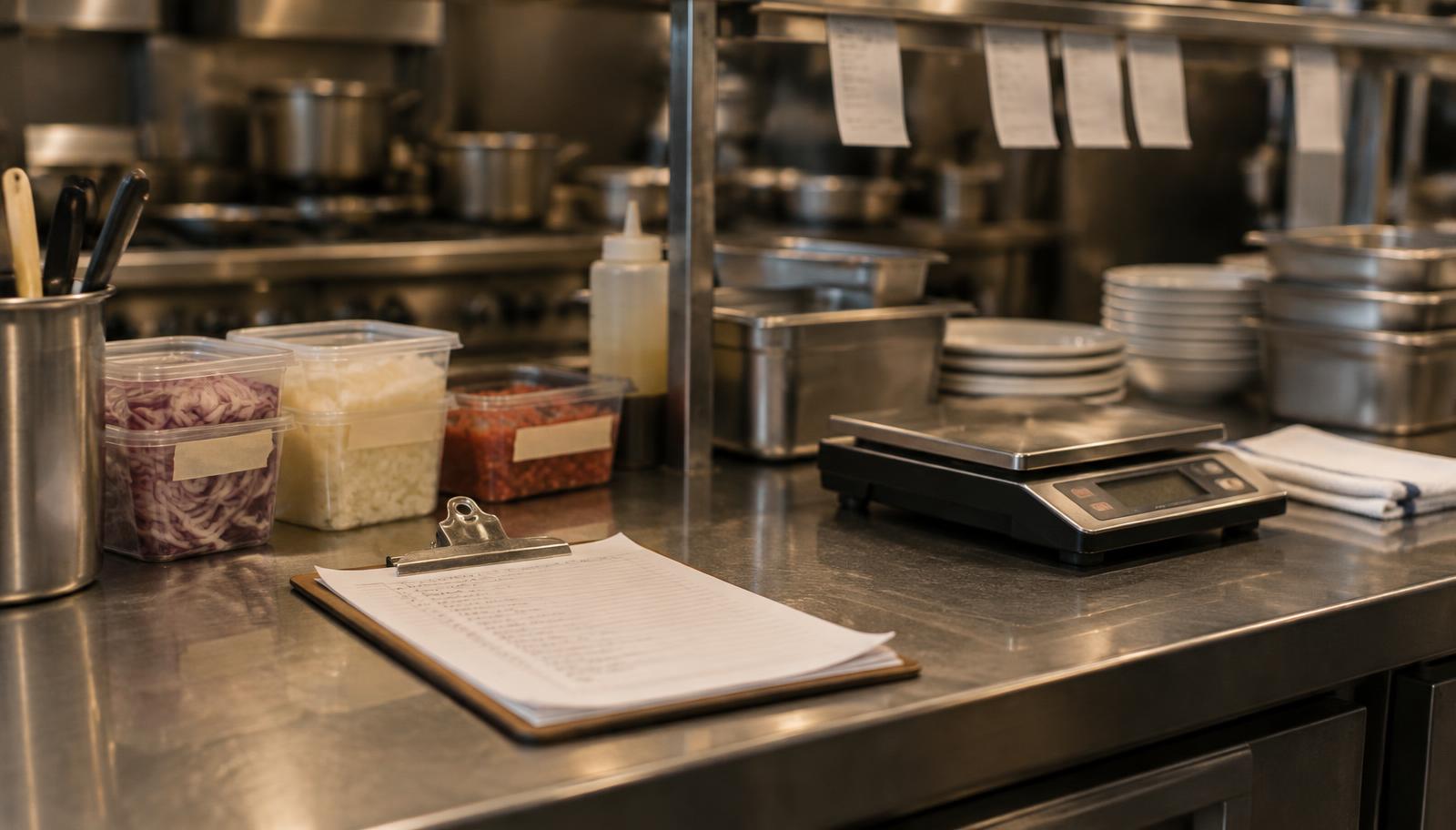
Most difficult services are not lost at the peak. They are lost earlier — when each cook walks into their section and starts prepping whatever they remember from yesterday, without knowing how many covers are booked, which dish is off, or who is missing from the team. The cost shows up later: one section runs out mid-service, another bins what it over-prepped at close.
Planning starts before the team arrives. The head chef or sous chef needs three things in front of them: today's bookings and groups, what has been delivered and what is still outstanding from suppliers, and what is left over from the previous shift. From these, a prep list is written for each section — in quantities, not in "make a bit extra". The list starts with what is already in the fridges, so whatever was prepared yesterday is used first.
A briefing needs no chairs and no agenda. Ten minutes are enough, before prep begins, with the whole team gathered in the kitchen — ideally with someone from front of house. It always covers the same points, in the same order: covers and when the rush is expected, allergies and special requests, dishes that are off or changed, which products need to be used today, and who covers which section.
The fixed order matters. When the briefing runs the same way every day, the team knows what to expect and new cooks settle in faster. An allergy mentioned in front of everyone is not forgotten once the orders start coming in. When a dish has run out, the floor knows before they recommend it — not after the guest has ordered it.
A good briefing is short, predictable and free of surprises. It works the same in a restaurant that opens for lunch, an all-day café or a hotel serving three meals a day — only the time changes. Ten minutes before every shift is perhaps the cheapest investment a kitchen can make in a calm service.
Related service
Our consulting servicesWorking on something? Let's talk.
Contact Trofi